BUCKET LIST ADVENTURE TO JAPAN
Best of Japan with Intrepid
Discover Japan through our eyes, from Tokyo’s neon streets to Mount Fuji, Hiroshima and Kyoto, with temples, food, culture and unforgettable moments.
Arrival in Tokyo – First Impressions of Japan
Time to master Chopsticks! Our Japan adventure started in Tokyo. First impressions arriving at Narita Airport were wonderful; the staff were lovely, so polite, with smiley faces. Navigating the train network into Tokyo was a breeze, much to my relief. The train took 50 minutes to Ueno; from here we could either take the subway or a taxi to the hotel. We took the easy option and got a cab.
Japan has always been a popular destination; however, over the last couple of years it has become a real bucket-list destination for many. We have seen huge demand for touring and cruising holidays, especially in spring when Japan turns pink with cherry blossom.
We chose to travel with Intrepid to cover as much as possible in our two-week timeframe. Here’s why: small group travel (essential in my opinion) with a maximum of twelve people, excellent local guides, decent and well-located hotels, and varied forms of transport including bullet trains, regular trains, subways, local buses and lots of walking.
Our hotel for our three-night stay in Tokyo was in the traditional town of Asakusa on the Sumida River, home to the famous Senso-ji Temple. We stayed at the Gate Hotel Kaminarimon, a lovely boutique hotel in a marvellous location with stunning views of Asakusa and Tokyo Skytree from the rooftop bar area.
Meeting Our Group and First Japanese Dinner

As with all Intrepid tours, there is an early evening welcome meeting. Yuka was our tour leader, and we took to her straight away. She created a WhatsApp group, which proved extremely useful throughout the trip. There were eleven of us in total, a great mix of Canadians, Americans and two lovely ladies from Australia, all well-travelled.
Following the meeting, Yuka took us to a restaurant for our first Japanese meal, which went down a treat.
Senso-ji Temple and Traditional Rituals

On our first full day in Tokyo, we walked across the road to Senso-ji Temple. It is the oldest temple in Tokyo, also called Asakusa Kannon, as it houses the Kannon. This important place of worship draws around 30 million visitors every year.

Passing through the gate took us to Nakamise Street, a 250-metre-long street packed with street food and shopping stalls. Before approaching the main hall, we washed our hands at the purification Chozuya, where water flows from stone dragons. From here, we bathed in the smoke at the Jokoro incense burner, waving the smoke over ourselves as it is believed to bring health and wisdom.

At the front of the main offering hall, you bow, place coins in the money box, bow twice, clap your hands twice, say a prayer or wish, and bow once again.

Tokyo Skytree and Shibuya Crossing
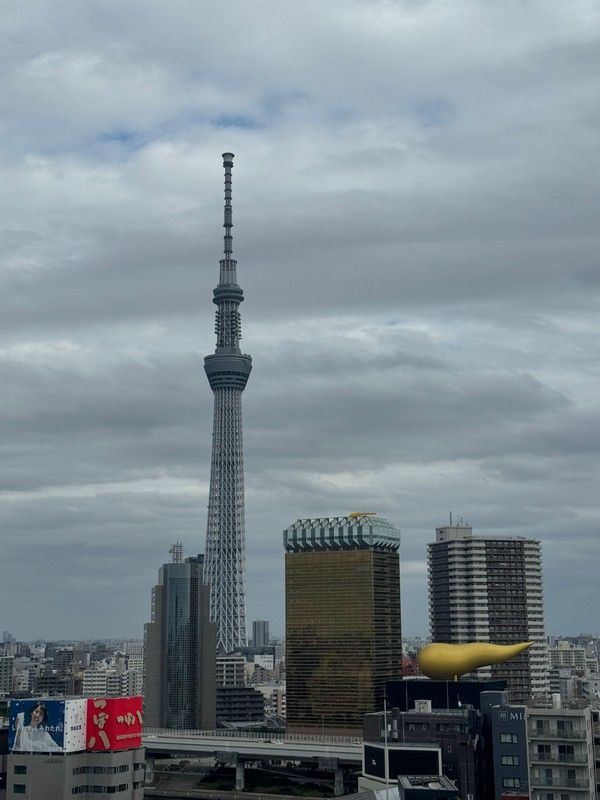
From Senso-ji Temple we took the subway to Tokyo Skytree for our reserved time at 11:30. It is one of Tokyo’s most popular attractions for a reason; the views are second to none, and being up there is a very special, occasionally nerve-wracking experience, especially standing on the glass floor and looking straight down. I have a fear of heights, but I forced myself to stand on the glass. I felt quite sick, but I did it!

It is Japan’s tallest building, soaring to 634 metres. The height is symbolic; when pronounced in Japanese, 634 reads as “Musashi”, paying homage to the historic Musashi Province. The Skytree has two observation areas: the Tembo Deck at 350 metres and the Tembo Galleria at 450 metres. It was a clear sunny day, so I managed to get some great photos.


Safely back on the ground, we hopped on the subway for a 30-minute ride to Shibuya. Shibuya is famous for its scramble crossing, located outside Shibuya Station’s Hachikō exit. Vehicles stop in all directions to allow pedestrians to flood the intersection. Despite the chaos, it works remarkably well, unlike some busy crossings in London.

Meiji Jingu Shrine and Takeshita Street

After crossing, we headed to the Shinto Meiji Jingu Shrine in Yoyogi Park, one of Tokyo’s largest green spaces and a peaceful retreat from the city. Entering through the Torii gate, we strolled through the forest toward the shrine. Along the way, we saw the wall of sake barrels, symbolising the connection between rice wine and Shinto, Japan’s indigenous religion.

At the shrine, we completed the purification ritual once again. By now, we knew the routine.
Our final stop of the day was Takeshita Street, the heart of Tokyo’s pop culture scene. This pedestrian-only street is packed with food stalls, eccentric fashion boutiques and countless gachapon capsule toy machines. There were also numerous animal cafés offering experiences with ferrets, meerkats, foxes, dogs, cats and even otters and micro pigs. These didn’t quite sit right with us, but they were very popular and extremely busy.
It had been a full-on day, and we thoroughly enjoyed it.


Tsukiji Outer Market and Sushi Making
On our second day in Tokyo, we took the subway to Tsukiji Outer Market, Japan’s “Food Town”. Here we encountered all kinds of traditional Japanese foods, with a mix of wholesale and retail shops and countless restaurants lining the streets.

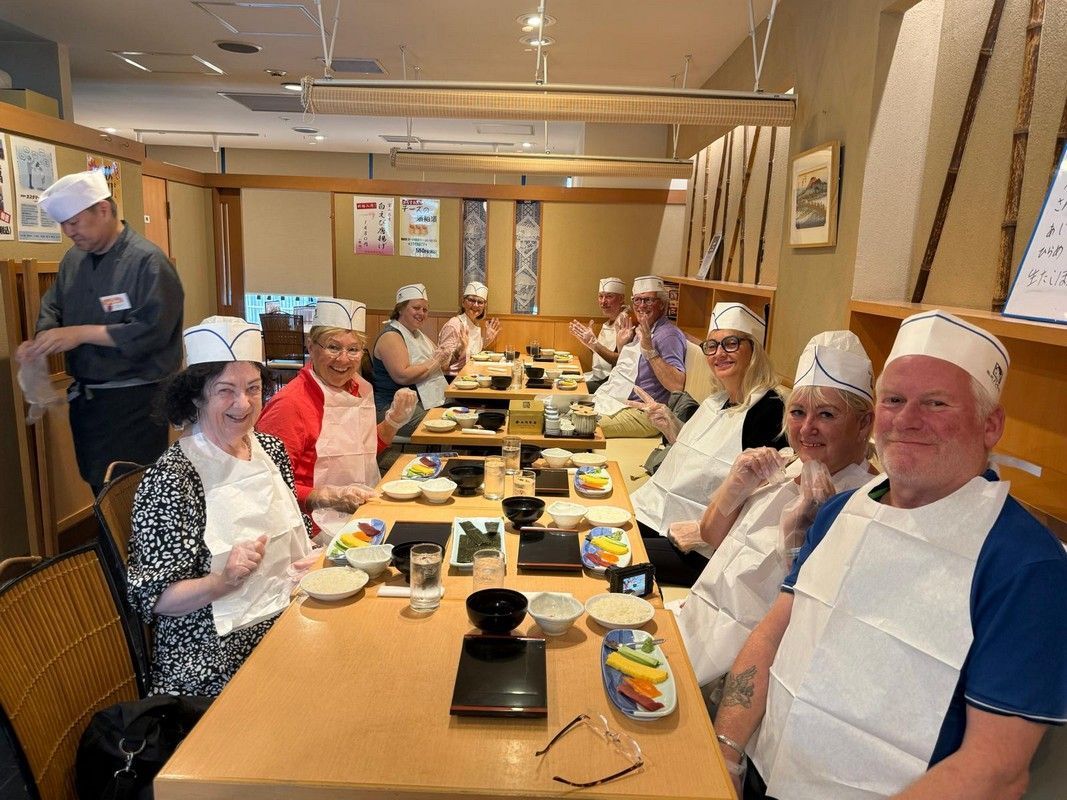
Now for a bit of fun. Yuka arranged a sushi-making class with a master chef who has been making sushi for over 30 years. Chef hats and aprons on, he gave us step-by-step instructions. Bill did his best and blamed the food-preparation gloves for his sushi presentation. As you can imagine, there was lots of laughter.
Hakone and Mount Fuji Views
Hakone bound. Hakone is part of the Fuji-Hakone-Izu National Park, not far from Tokyo, and is renowned for its hot springs, natural beauty and views across Lake Ashinoko toward Mount Fuji.

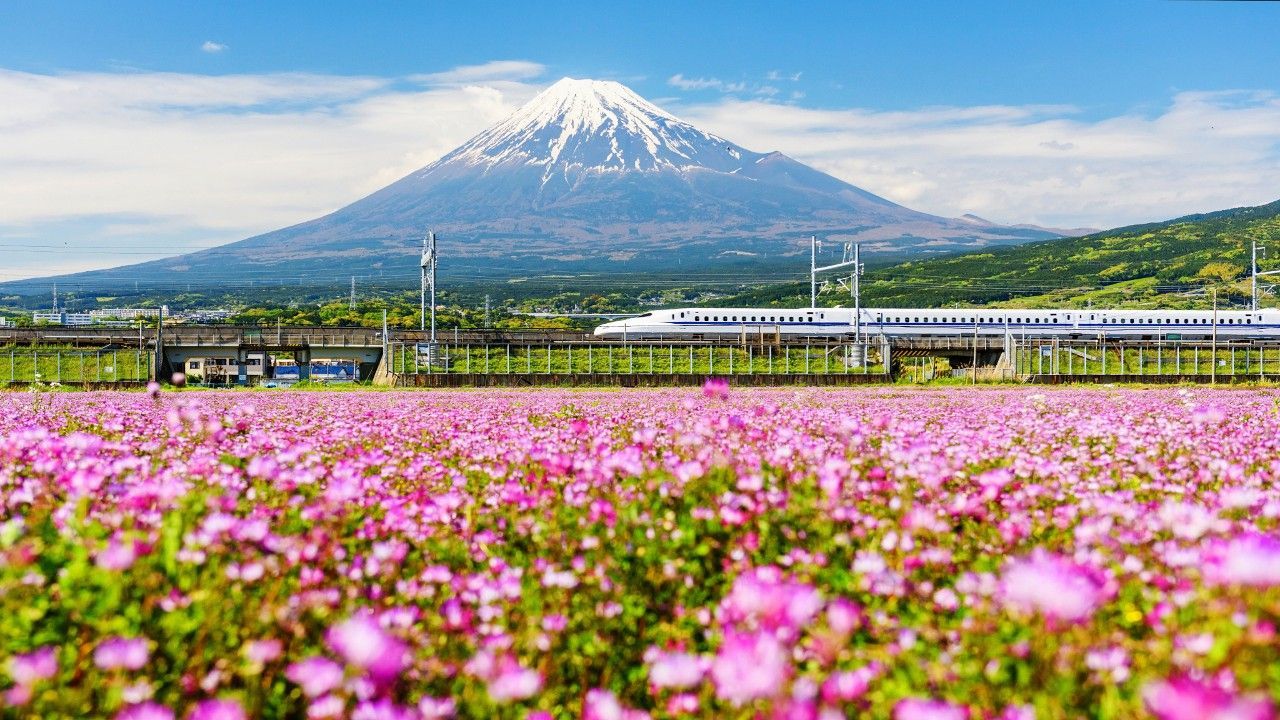
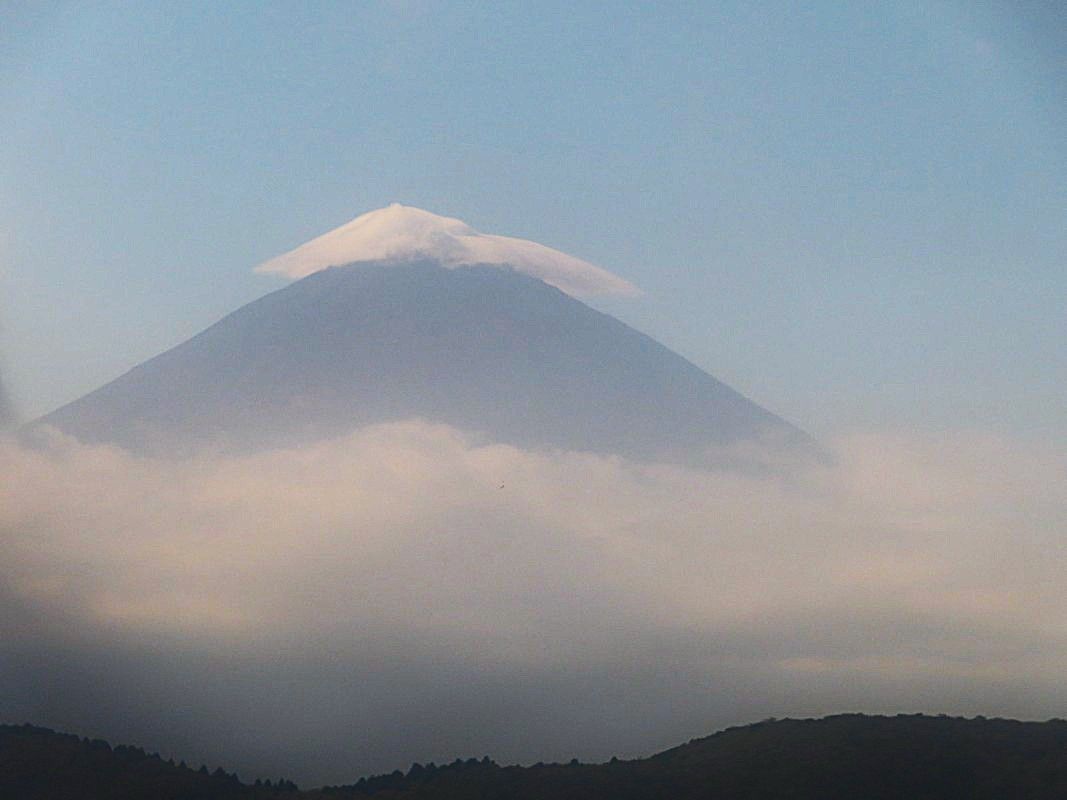
It was an early start. We took the subway to Tokyo Station during rush hour, then boarded a bullet train to Odawara, a 30-minute ride reaching 282 kph - that’s 175 mph in old money. From there, we transferred to a crowded regular train for a 40-minute journey, mostly standing. The train had to keep levelling, by zig zagging sideways across the mountain, then we got a very large cable car, again crowded but only a short journey to the Rope Car for our ten minute ride up to the sulphur vents at Owakudani. We were extremely lucky and excited to get a clear view of Mount Fuji from the rope car up as we headed up to the sulphur vents.

We were extremely lucky to get a clear view of Mount Fuji from the ropeway before clouds rolled in later. Here there were places to eat, grab snacks or navigate your way around the gift shop! Note, the snack bar here only takes cash, we found this quite a lot, ideally get some Yen before travelling, and withdraw cash as needed there are plenty of ATMs.
Lake Ashinoko and Ryokan Experience
After exploring Owakudani, we caught the cable car down and enjoyed a boat ride across the serene Lake Ashinoko. On clear days you can sometimes see Mount Fuji from the lake, but by then it had clouded over.
All rooms here have a private Onsen, hot springs open air bath, which was just what we needed after a long day. When checking in, you choose your Kimono by height size, S M L, head to your room where you will find the sash belt and slippers beautifully presented in a basket, of course the slippers were massive on my size 2 feet.
This is the dress code whilst here, the Kimono’s were soft and comfortable. It’s hard to make out from my photos but the bed is about 5 inches off the floor. The base is wooden with an extremely thin mattress, I did have a full night’s sleep, Bill didn’t, said he felt he was sleeping on a wooden pallet!

Our dinner in the evening was a typical Japanese menu. We particularly enjoyed the strips of beef you cook yourself. Breakfast is very similar to dinner, nothing much recognisable, apart from the rice and coffee! All the staff here were wonderful, the head waiter had a great sense of humour and clearly loved his job.
Takayama and the Japanese Alps
Japanese Alps, here we come. Via taxi, train and bullet train, we arrived in Takayama for two nights and normal beds. The final train journey offered stunning views of lush green mountains and the Hida River running alongside.
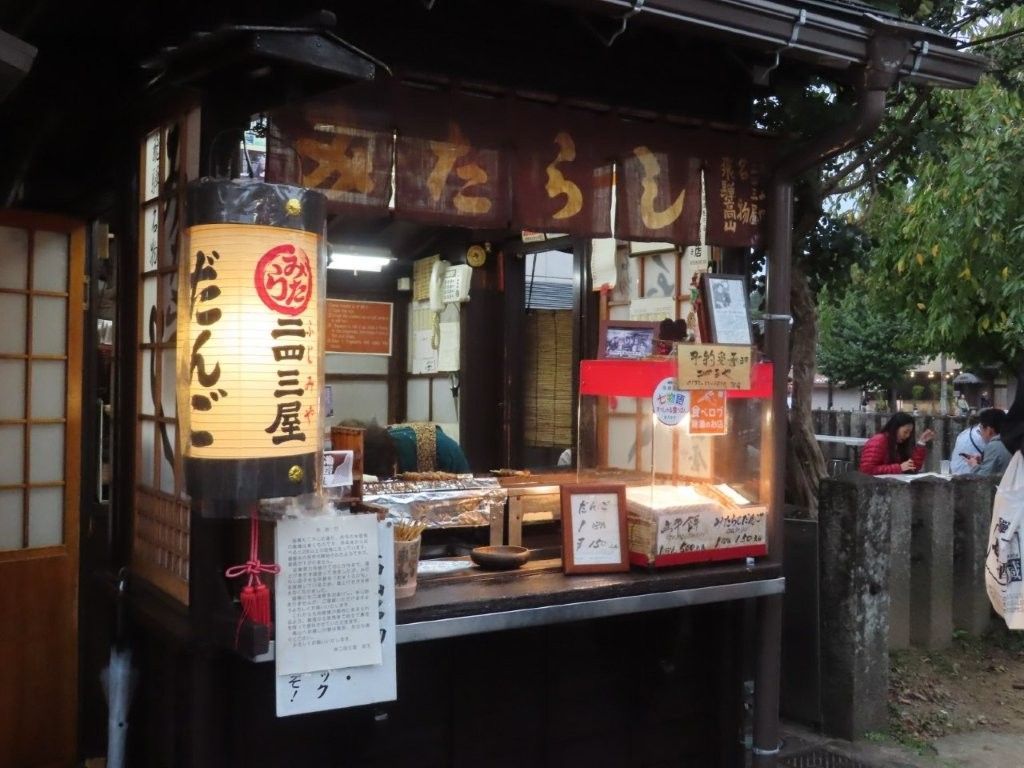
Takayama is a charming Edo-period town located in the Japanese alps. Renowned for its traditional inns, sake breweries and tranquil atmosphere, this riverside jewel of central Honshu. This area is particularly famous for Hida beef, which comes from a black-haired Japanese cattle breed that has been raised in Gifu Prefecture area for at least 14 months. Here you will see a lot of Sarubobo’s they are a Japanese amulet, they are red human shaped dolls without any facial features, they come in all sizes, we spotted tiny Sarubobo’s attached to mobile phones and handbags.
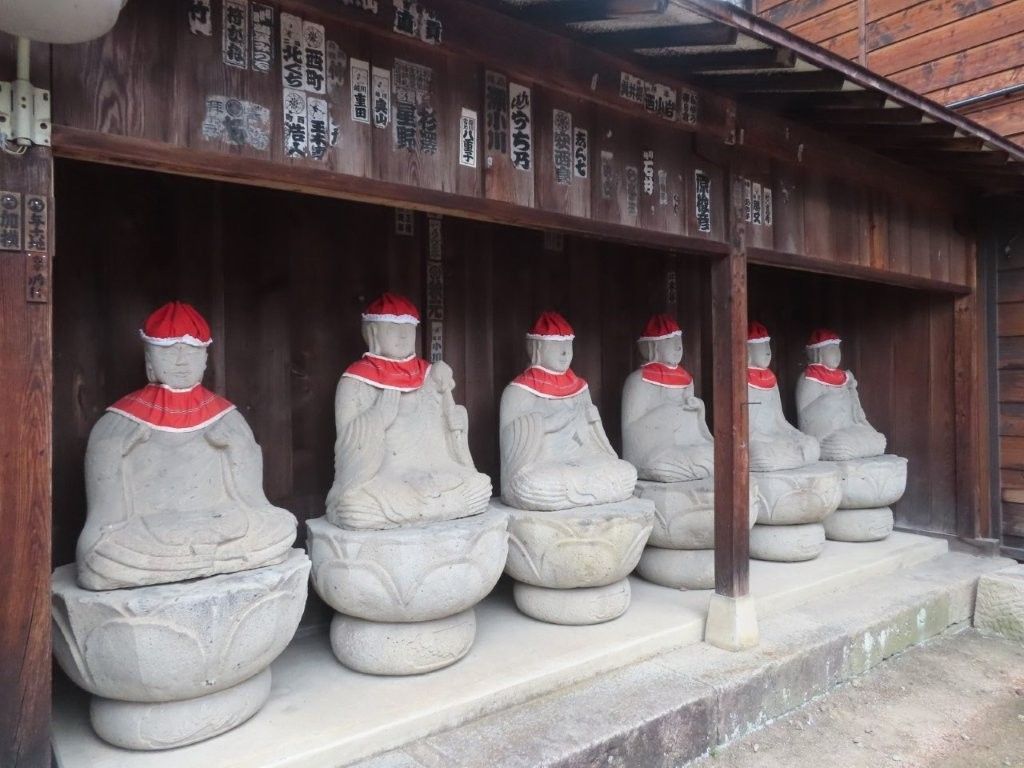
We stayed at the ‘Around Hotel’ odd name but a great location in the centre of town. No time we waste, we all headed out on a walking tour with Yuka. There is plenty to see in Takayama, markets, museums, Takayama Festival Float Exhibition Hall, a Workshop of local crafts, the list goes on. In the evening, we enjoyed dinner at Tenaga Ashinaga which offers many speciality dishes, we chose Houba (grilled beef) with miso sauce served on a large Magnolia leaf.
Shirakawa-go and Traditional Villages

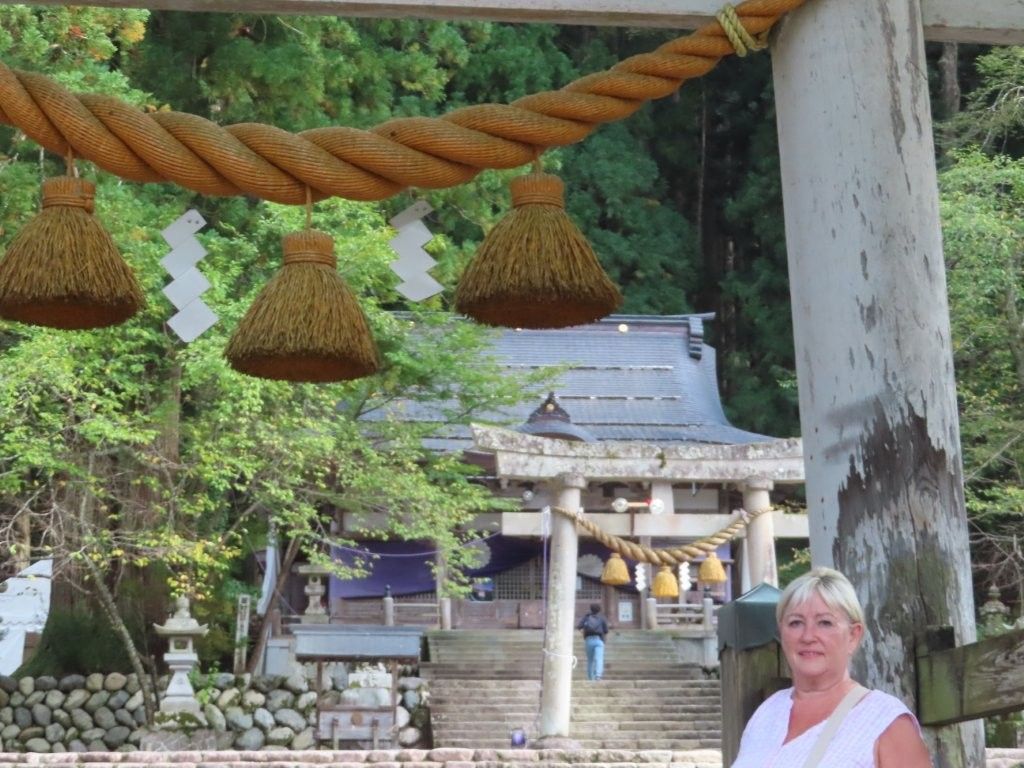
I wasn’t feeling a 100% so we skipped the morning market tour as I wanted to make sure, I could do the afternoon tour to the village of Shirakawa-go, which we were really looking forward to. Feeling much better, we hopped on a public bus for the 50 minute ride to the village of Shirakawa-go. It is a Japanese mountain settlement which was once considered a wild and unexplored area, it is now a World Cultural Heritage site.
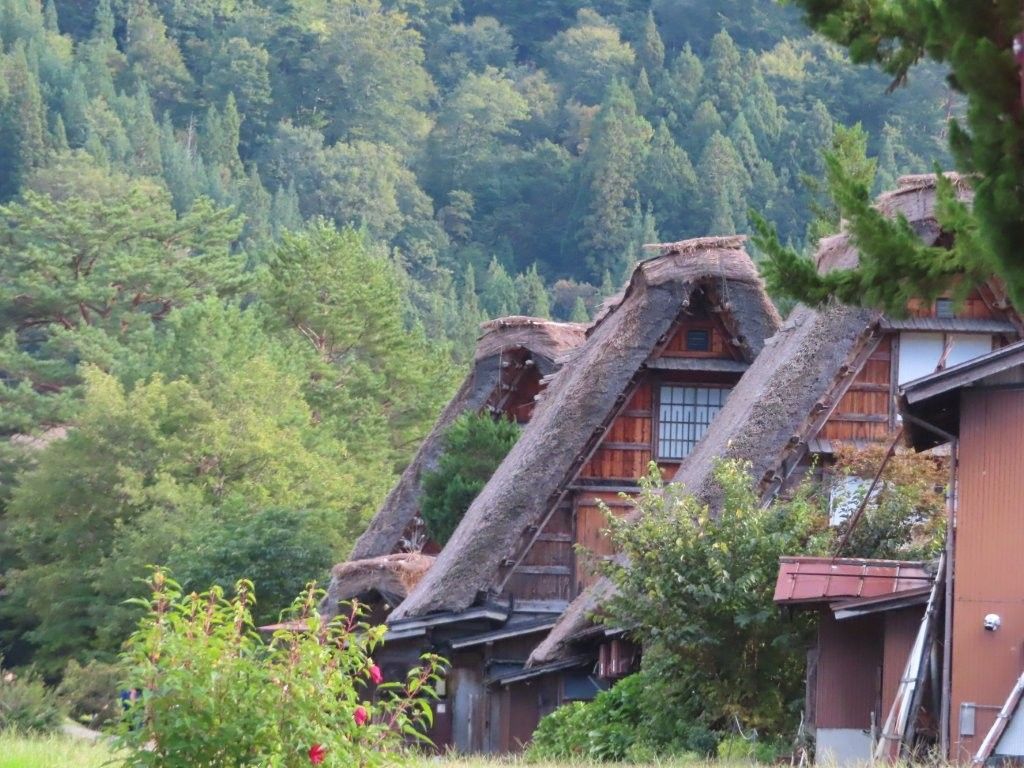
Scattered with charming thatched-roof cottages built in the gassho-zukuri style with the magnificent backdrop of the Japanese Alps, we spent a few hours here and chilled out people watching or should I say dog watching. The Japanese love their dogs many of them have fancy outfits and pushed around in little prams. There are Mooneck (spelt correctly) Bears (Asiatic black bears) in this area with plenty of warning signs asking visitors to be cautious, carry bear bells, stay on marked paths, not a good idea to walk at night!
Back at Takayama we decided we wanted a break from Japanese food and found a lovely Spanish restaurant, at Casa de Botchini, family run, excellent food and service. Worth noting, restaurants close early here and are busy, we booked our table via the hotel concierge, alternatively you can stand in line which a lot of people tend to do.
We spent a few hours relaxing and people watching, or rather dog watching. The Japanese adore their dogs, many dressed in outfits and pushed around in little prams. Warning signs reminded visitors of Asiatic black bears in the area, advising caution and bear bells.
Hiroshima and a City of Peace
Hiroshima bound. We travelled via Nagoya on an express train, followed by a bullet train to Hiroshima. The journey was calm and peaceful; mobile phones must be on silent and conversations are kept to a minimum.
Our home for the next two nights is the Candio Hotel. great location, close to Memorial Cathedral for World Peace, Hiroshima Castle, Shukkeien, Hiroshima Museum of Art and Atomic Bomb Dome. This city has tightknit communities, and their focus is on promoting world peace.

No visit to Hiroshima is complete unless you visit the Genbaku (A-Bomb) Dome and the Peace Memorial Park and Museum. The museum was very moving, to say the least, the photos are quite graphic, the stories alongside the photo’s made us very emotional indeed. The main building has four sections, ‘Devastation on 6 August, Damage from radiation, Cries of the Soul and To live’ these display personal belongings of victims, exhibits describing the horrors and devastation of the atomic bomb. The photo’s before and after of the area were unrecognisable, apart from the Dome that wasn’t destroyed somehow managed to retain its shape, serving as a reminder of the attack, now a symbol of peace. We had a local guide Mr Kitamura, who with tears in his eyes shared the devasting story about that fateful day on 6 August 1945 at 0815am.

Paper cranes are a symbol of peace and hope for Hiroshima, linked to the story of Sadako Sasaki, a young girl who died from leukaemia caused by the atomic bomb. Inspired by a Japanese legend that folding 1,000 cranes grants a wish; she began folding them in the hospital. Although stories differ on whether she completed them before her death, her story transformed the crane into a global symbol of peace for victims of nuclear weapons, and thousands of cranes are still sent to the Children's Peace Monument in Hiroshima
Miyajima Island and Floating Torii Gate

After our visit to the park and museum we took a short ferry ride to Miyajima Island famous for its ‘floating’ red/orange O-torii gate, with a height of 16.6 meters, weighing some 60 tons, it is impressive. Here you will fine the Shinto shrine of Itsukushimi, a UNESCO World Heritage site.

Getting off the ferry we were greeted by Sika deer who roam freely you must not feed them, but it doesn’t stop the deer trying to poke their noses in bags to search for treats! Miyajima is an ideal place for walking, lots of eateries, craft shops and ice cream stands. Not up for a hike, you can take the ropeway to the top of Mount Misen for stunning views of the island and Seto inland sea for around £10, we had intended on doing this, but it started to rain quite heavily, so we went off the idea and found a bar to take cover!

Our dinner tonight was to sample Okonomiyaki it is a savoury Japanese pancake made from a flour and egg batter mixed with shredded cabbage and other ingredients like meat or seafood and soba noodles. Hidden away, Yuka took us to the first floor which was full of Okonomiyaki eateries, all were very busy with queues forming, we had a reservation so no queuing for us. These multi layered pancakes are cooked in front of you and was mesmerising watching how the pancakes are put together, they were delicious and large!

Kyoto, Himeji, Temples and Traditions
On our train journey north to Kyoto we stopped off at Himeji to visit the World Heritage site of Himeji Castle, Japan’s most impressive samurai castle. This six story building, constructed in wood with white plastered walls has survived earthquakes, fires and war since the mid-16th century, it was restored to its full glory in 2015. This castle was once home to over 10,000 samurai. Many great movies were filmed here, including ‘You only live twice’ with agent 007, Sean Connery!

We had an excellent local guide, Ms Yamamoto, was so enthusiastic she did a fantastic job of bringing the history of the castle to life. We wanted to bottle up her energy and bring it home with us!
We visited the Kokoen (Japanese Garden) just a few minutes’ walk away. Opened in 1992 it features nine separate walled gardens in various styles of the ‘Edo Period’ and a stunning rather large pond with waterfalls. Bill was delighted to finally see some Koi fish; he was missing his at home!

Our final part of our Japan adventure was Kyoto, originally founded as Heian-kyo meaning ‘tranquillity and peace capital' by Emperor Kammu in 794. Kyoto had its golden age during the imperial court's heyday from 794 to 1185. Our hotel for the next four nights was The Monterey situated downtown and just steps from the Nishiki Market, known locally as ‘Kyoto’s Kitchen. It is huge, it was raining when we visited so we were grateful most of the market is undercover. We have never seen so many fish stands, many varieties unrecognisable to us, but were popular with the local shoppers. There are food stands cooking freshly made snacks, we tried a pork skewer which was delicious.
We explored Gion, Kyoto’s most famous geisha district, full of old wooden teahouses and exclusive restaurants. It is a very quaint part of Kyoto. Geishas usually arrive by taxi and go straight to their event, so you can get a glimpse of them, you should be respectful and not photograph their faces which I adhered to, I did manage to get a picture of the back of a Geisha. We saw a lot of girls dressed up as Geishas; you can hire an outfit from a hire shop if you fancy dressing up!
We covered a lot of ground in Kyoto, visiting the extravagantly decorated Zen Temple, Kinkakuji (Golden Pavillion) the top two floors are covered in gold leaf and sits proudly overlooking a large pond. Built in 1397 as a retirement villa, it was then converted a to Zen Temple in 1408. It survived many fires over the years but in 1950 a young Novice Monk set the temple on fire, nearly destroying it completely, if was rebuilt to its current glory in 1955.
We took part in a Monk guided Meditation session at the 800 year old Daitokuji Temple, the head temple of the Daitokuji School of the Rinzai sect of Zen Buddhism. Bill and I found it near impossible to clear our minds! You can request to be struck with a stick if you are struggling to focus, the Monk will come and whack your shoulders, apparently this triggers muscle relaxation, helping to release tension and energy, oddly enough we didn’t make a request. The Monk can also choose to strike a meditator if he thinks one is losing focus or slouching, Bill and I kept as still as we could…. it seemed a lot longer than 30 minutes!

We visited Kyoto’s famed Fushimi Inari Shrine known throughout the world as the ‘Path of the Red Gates.’ We walked through all 1000 gates, fortunately you only bow at the first one!
From here we took a short train to a Sake brewery, Sasaki Sake Brewery, founded in 1893 is famous as the family home of actor Kuranosuke Sasaki. Adorned with our sexy hairnets we had a private tour behind the scenes learning how Sake is made, this was followed by tastings of the different varieties of Sake’s, very enjoyable. How to spot a shop, restaurant or brewery serving or selling Sake? Look out for the decorative ball made of cedar branches, called a Sugidama or Sakabayashi.

Final Evening and Farewell

Our last evening as a group, Yuka took us to a wonderful restaurant, Minokichi Karasumashijo, established in 1716 and still going strong. We had a selection of dishes which were all elegantly served. Bill and I spotted the private dining room to our horror it looked like we would be sitting on the floor to eat from a very low table, what a relief to find it was a Horigotatsu .
A perfect ending to an unforgettable journey.
General Notes & Impressions from Japan
Our trip to Japan was wonderfully well-balanced — a mix of structured sightseeing and enough free time to explore at our own pace. Our guide, Yuka, provided a wealth of information throughout the journey, making every experience richer and more meaningful.
Getting Around Japan
Japan’s commitment to efficiency and sustainability really stands out — most of the vehicles we encountered were electric, and the transport system ran like clockwork. Everything felt incredibly orderly; people consistently followed rules, such as standing on the correct side of stairs and escalators, which kept crowds moving smoothly.
The subway system was surprisingly easy to navigate thanks to clear signage, detailed maps, and several useful travel apps. Just remember: keep your mobile on silent and avoid talking on the phone while on public transport — it’s considered impolite.
We were amazed that we didn’t hear a single phone ring the entire time we were in Japan!
Transport & Payments in Japan
- Uber works very efficiently and is often the easiest option for getting around cities.
- Taxis are spotless and reliable, but drivers rarely speak English, so it helps to have your destination written in Japanese.
- ATMs are widely available, but note that some only accept Japanese cards — ATMs in FamilyMart convenience stores usually work with international cards.
- Apple Wallet and some digital payment systems may not work everywhere, so always carry a physical card and cash.
- Many smaller restaurants and shops are cash-only, so it’s best to have yen on hand.
Dining & Etiquette in Japan
Japan’s politeness and respect for others extend into daily habits. You’ll notice that eating or drinking while walking is frowned upon, and locals are remarkably courteous, quiet, and well-mannered in public spaces.
If you’re planning special meals, pre-book your dinner reservations — popular restaurants often fill up quickly, even on weekdays.
Final Thoughts
From the impeccable orderliness to the incredible courtesy of everyone we met, Japan left a lasting impression. It’s a destination where efficiency meets grace — a place that quietly reminds you how harmony, respect, and attention to detail can make everyday life feel extraordinary.
Please visit our dedicated Japan page for holiday ideas, or give us call to chat through your options.